 Holiday start
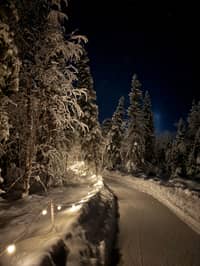
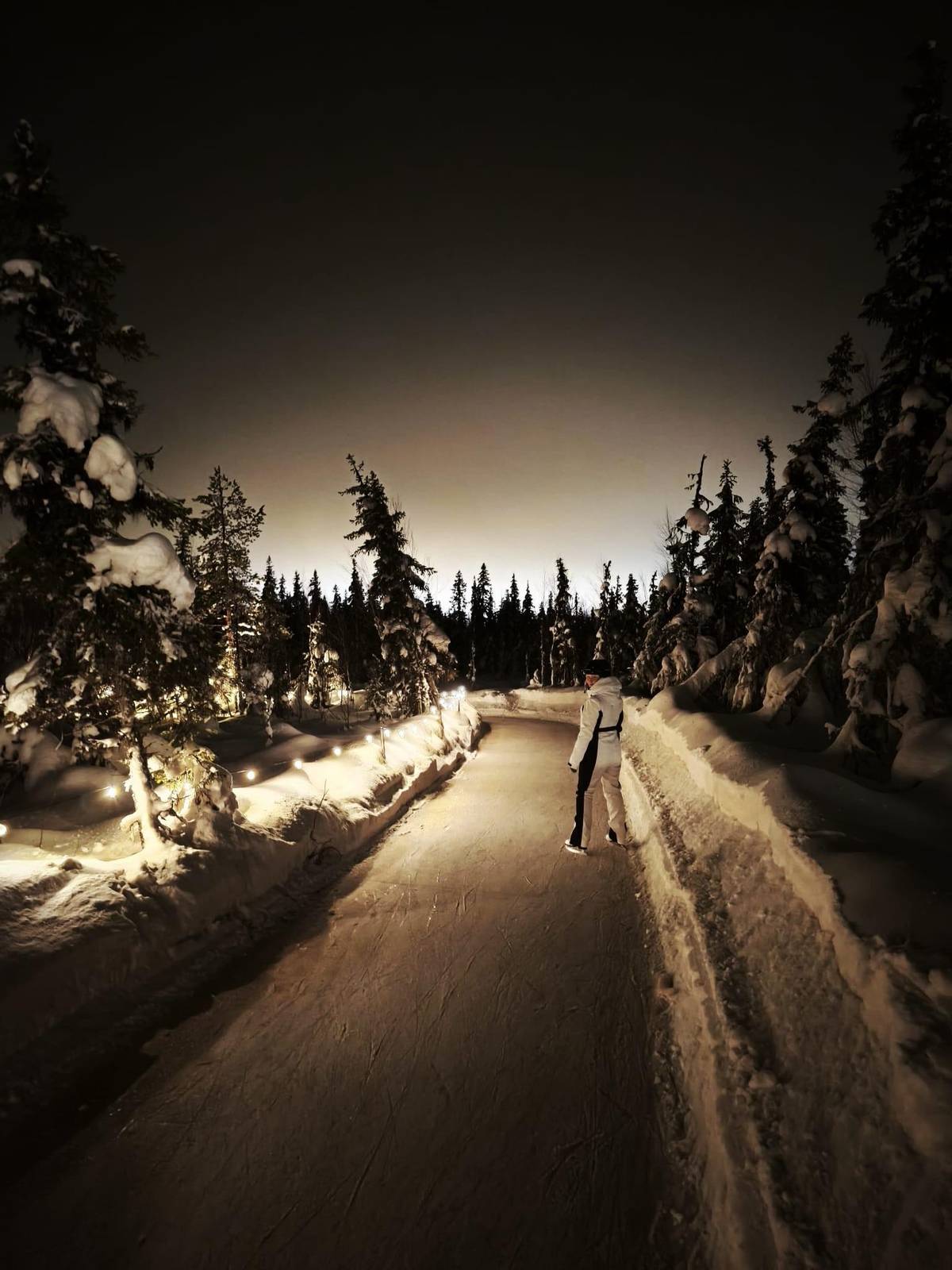
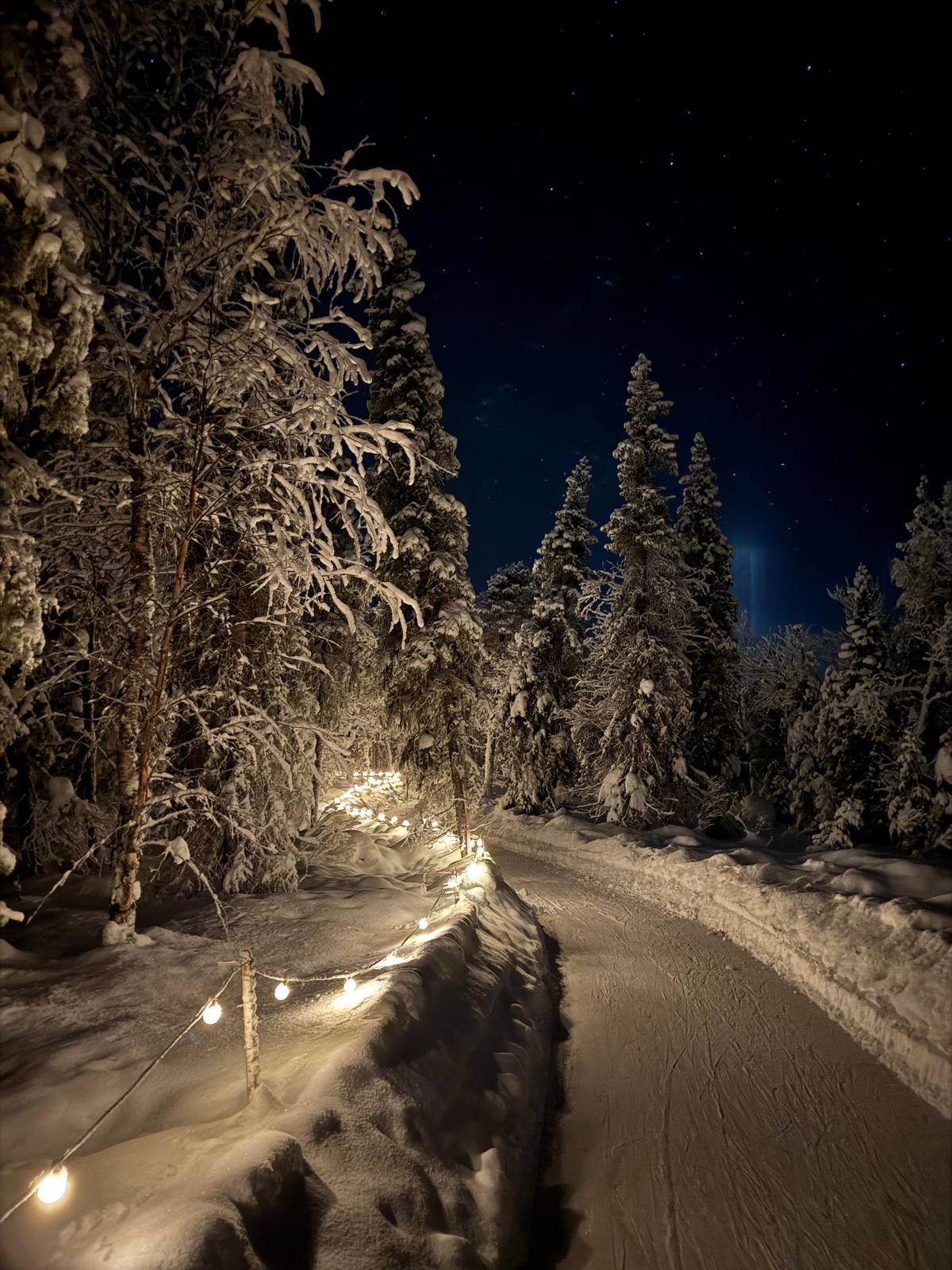
Forest trail near Levi
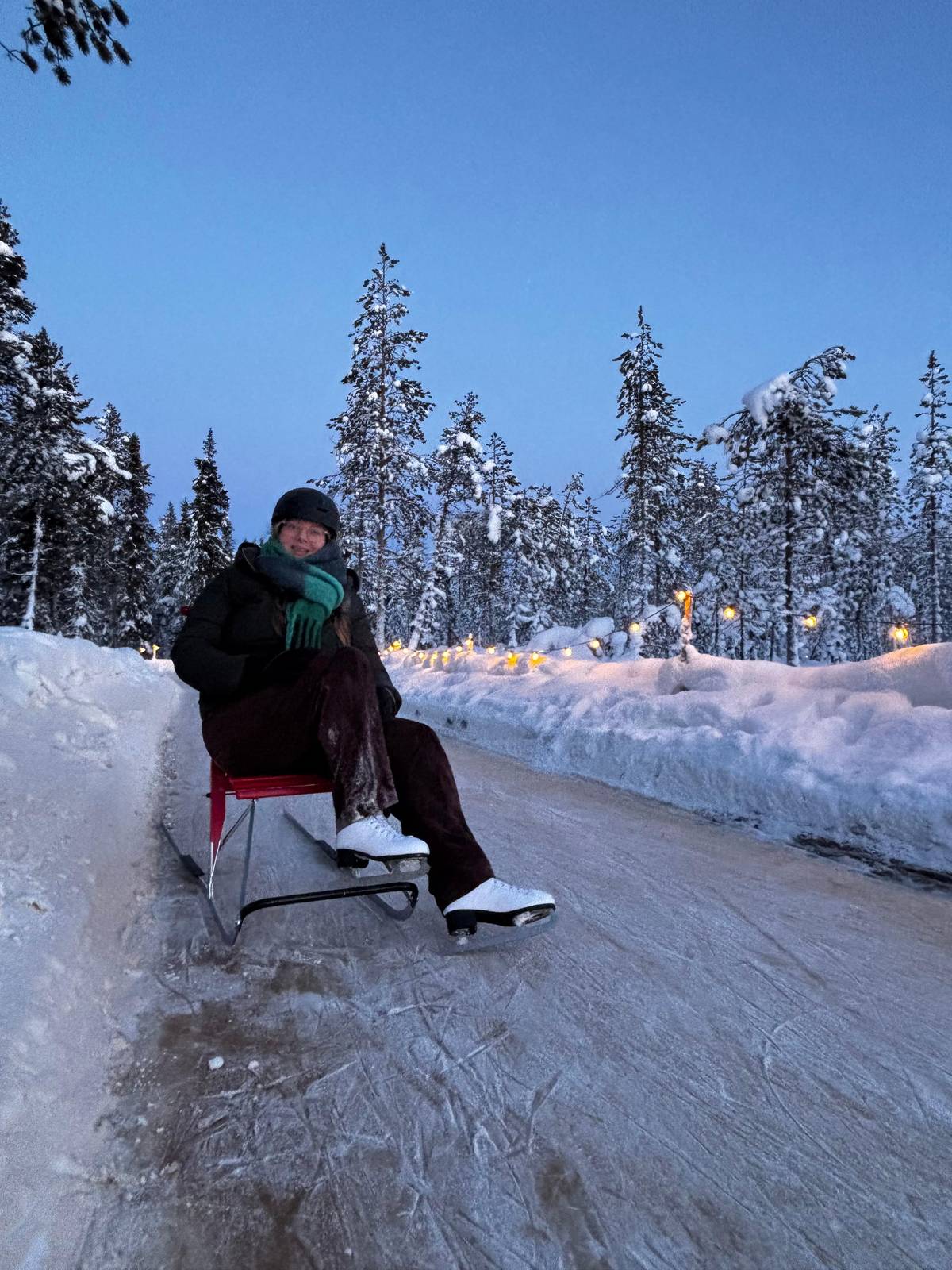
Guided, with kicksleds
- Session
- 2 hrs
- Kit
- Skates and helmet
- Help
- Kicksled if needed
Guides
Language
EnglishCurrency
US dollar · $GetYourGuide shows prices in the currency you choose.
Guide · Beginners
The levels of ice skating used by skating federations show the order in which everyone learns: balance, gliding, stopping, then turns. Here is how those levels work, how to ice skate step by step, and how a first-timer gets on with the lit forest trail near Levi.
Editorial team, iceskatinglevi.comUpdated October 22, 20266 min read29 sources
The quick answer
Skating federations break learning into levels so that every skater builds the same foundation in the same order. Learn to Skate USA, the programme of U.S. Figure Skating, describes its Basic Skills curriculum as a six-level foundation for figure skating, ice hockey and speed skating.2 Skate Canada's CanSkate builds basic skills for figure skating, hockey, ringette or speed skating, for beginners of all ages.4
The levels matter to a holiday skater for one reason: they tell you what comes first. Learn to Skate USA says its Basic Skills levels introduce forward and backward skating, stops, edges and turns, in that kind of progression.8 Nobody starts with spins; everybody starts by standing up.
You do not need to pass a level to enjoy a session on the ice near Levi. The forest skating session welcomes complete beginners, with a kicksled for anyone who cannot skate, and its listing names no level or age requirement. Knowing the order of skills simply helps you set a fair goal for one session.
Step by step
In the United States, the youngest skaters start with Snowplow Sam, for children aged six and younger, in four levels, Snowplow Sam 1 to 4.1 Those levels introduce forward and backward skating, stops, edges and balance, and afterwards children can move into Basic Skills or try other disciplines.1112
Basic Skills is designed for skaters over the age of 6 and runs six levels.132 Learn to Skate USA stresses that every skater advances at their own pace, working towards mastering each skill.14 Above it sits the Free Skate curriculum, with seven levels introducing skating skills, spins and jumps.15
Adults have their own path. The adult programme has six progressive levels introducing forward and backward skating, stops, edges and turns, and Learn to Skate USA says it is designed for beginning and experienced skaters who want to improve.1617 Its advice for anyone starting out is to contact a local rink about classes and which level to sign up for.18
Compared
| Programme | Who it is for | Levels | Marked by |
|---|---|---|---|
| Snowplow Sam (USA) | Children six and under | 1 to 4 | Level passes |
| Basic Skills (USA) | Skaters over 6 | 1 to 6 | Level passes |
| Adult (USA) | Adults | 1 to 6 | Level passes |
| CanSkate (Canada) | Beginners of all ages | Stages 1 to 6 | Ribbons and badges |
| Pingviini (Finland) | Children | Own pace | Star diplomas |
From Learn to Skate USA, Skate Canada and the Finnish Figure Skating Association.113164356
Where to learn
Holiday startGuided, with kicksleds
 Lake ice
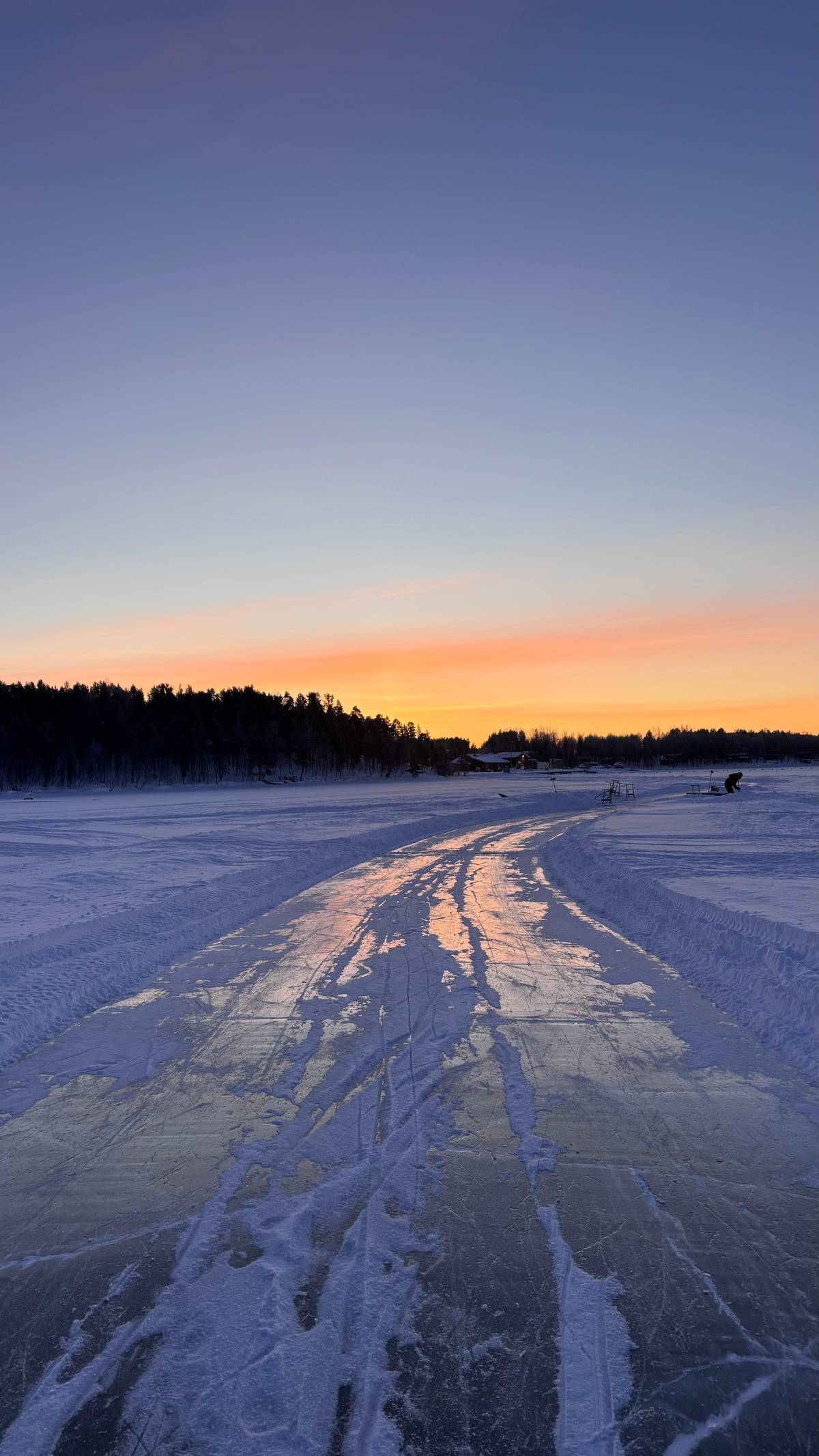
Guided on lake ice
 Long term
At home, before you travel
Decision helper
Find yourself, then set a goal for the session
Offered on the forest trail, subject to availability.
Knees bent over the toes, eyes up.7
Two-foot glide, then press the inside edges.9
The next skill in the Basic Skills order.8
The later skills of the adult levels.16
In the correct skating position, keep your knees slightly bent, positioned over your toes, and your eyes up. This position lowers your center of gravity, stabilizing you.
Canada's CanSkate focuses on balance, control and agility, and awards official Skate Canada ribbons and badges for Stages 1 to 6 in balance, agility and control.193 Skate Canada sets a ratio of one coach or programme assistant to five skaters, including one coach for every 10 skaters.20 Its helmet rule is strict: CanSkate skaters up to and including Stage 5 wear an approved hockey helmet.21
In Finland, the Finnish Figure Skating Association runs the Pingviini, or Penguin, skating school, a path for children to learn basic skating skills safely, through play and at their own pace.5 Progress depends on the child's age, skills, practice and goals, and learning is celebrated with Tähtidiplomit, star diplomas.6
Finland also opens doors for adults and newcomers. The association says more than 30 Finnish figure skating clubs offer groups or courses for adult skaters, and its Hippo skating school is completely free of charge for participants.2223 A visitor who catches the bug in Levi will find somewhere to keep learning back home.
Cost calculator
Choose a session and the number of skaters.
Total from$159
per participant from $80
Check availabilityfree cancellationEach sum multiplies the outing's lowest per-person GetYourGuide price by your group size and converts it at the ECB's daily rate; the checkout figure is the one that counts.
Video
YouTube stays switched off until you start the video yourself.
Start with stance. Levi's tourism site advises keeping the knees slightly bent over the toes and the eyes up, which lowers the centre of gravity.7 Stand like that on the spot before you try to move, and feel how the blade wants to stay under your weight rather than slide away.
Then march and glide. Take small steps on the spot, then small steps forward, letting each foot glide a little further. Push to the side rather than backwards, as if you were scuffing the ice outwards, and bring the foot back under you. Arms slightly out in front help balance.
Learn to stop early. For a snowplow stop, Levi says to slow down in a two-foot glide position, bend the knees and ankles, then press on the inside edges of the blades.9 It is the same stop that gives Snowplow Sam its name. Practise it at walking pace until it works every time, then let yourself glide faster.
Everyone falls. Levi's tourism site says falling sideways is the safest way to fall.10 If you feel yourself going, bend your knees further and lean slightly to one side, so you land on your hip and thigh rather than your wrist or the back of your head.
Getting up has a method too. Levi's advice is to roll onto your hands and knees, then set one foot, preferably the dominant one, on the ice between your hands, and push up from there.10 Mittens help here: they protect your fingers from the ice and from other skaters' blades.
A helmet makes the falls painless rather than worrying. Levi says skating is always done at your own risk and asks skaters to wear a helmet, and the forest skating session includes one with the skates.24 Skate Canada's rule says the same from the other side: anyone who has difficulty stopping should wear an approved hockey helmet.26
Programmes start skaters young. Learn to Skate USA's Snowplow Sam is designed for children aged six and younger, and Basic Skills for skaters over 6.113 In Finland, the Hippo skating schools are aimed at children of all ages and run over four skating sessions.27
On holiday, set the goal by age and mood rather than by level. A small child who stands up, takes a few gliding steps and laughs has had a successful first session. An older child may manage the snowplow stop within the session; a teenager who has played sport may be skating loops of the trail by the end.
For anyone who catches the habit, Finland makes trying again easy. The Finnish Figure Skating Association says that in January 2027 the Finnish Ice Sports Days offer free, low-threshold chances to try ice sports and develop skating skills.28 Back home, Learn to Skate USA's advice applies anywhere: ask your local rink about classes and which level to start at.18
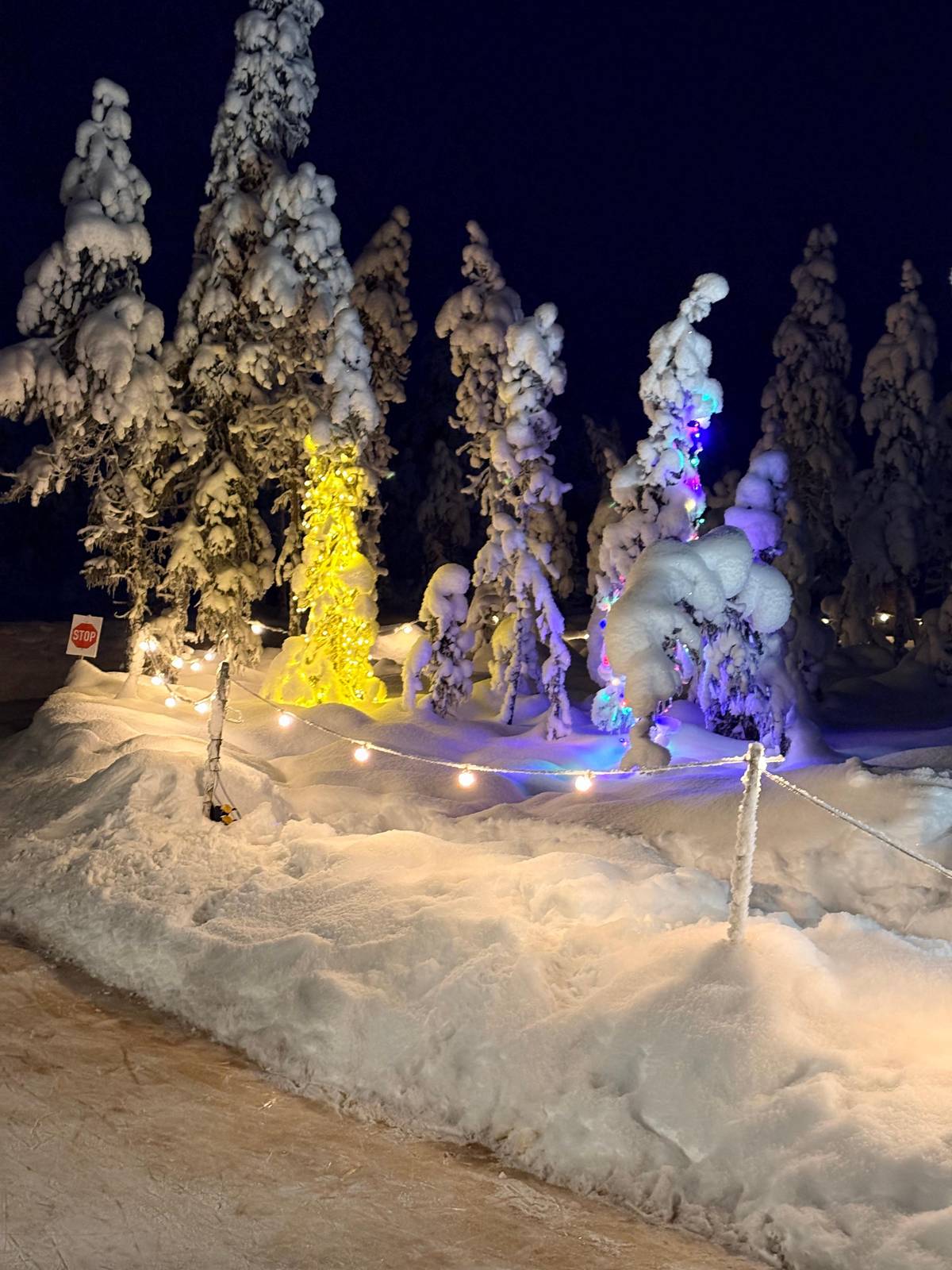
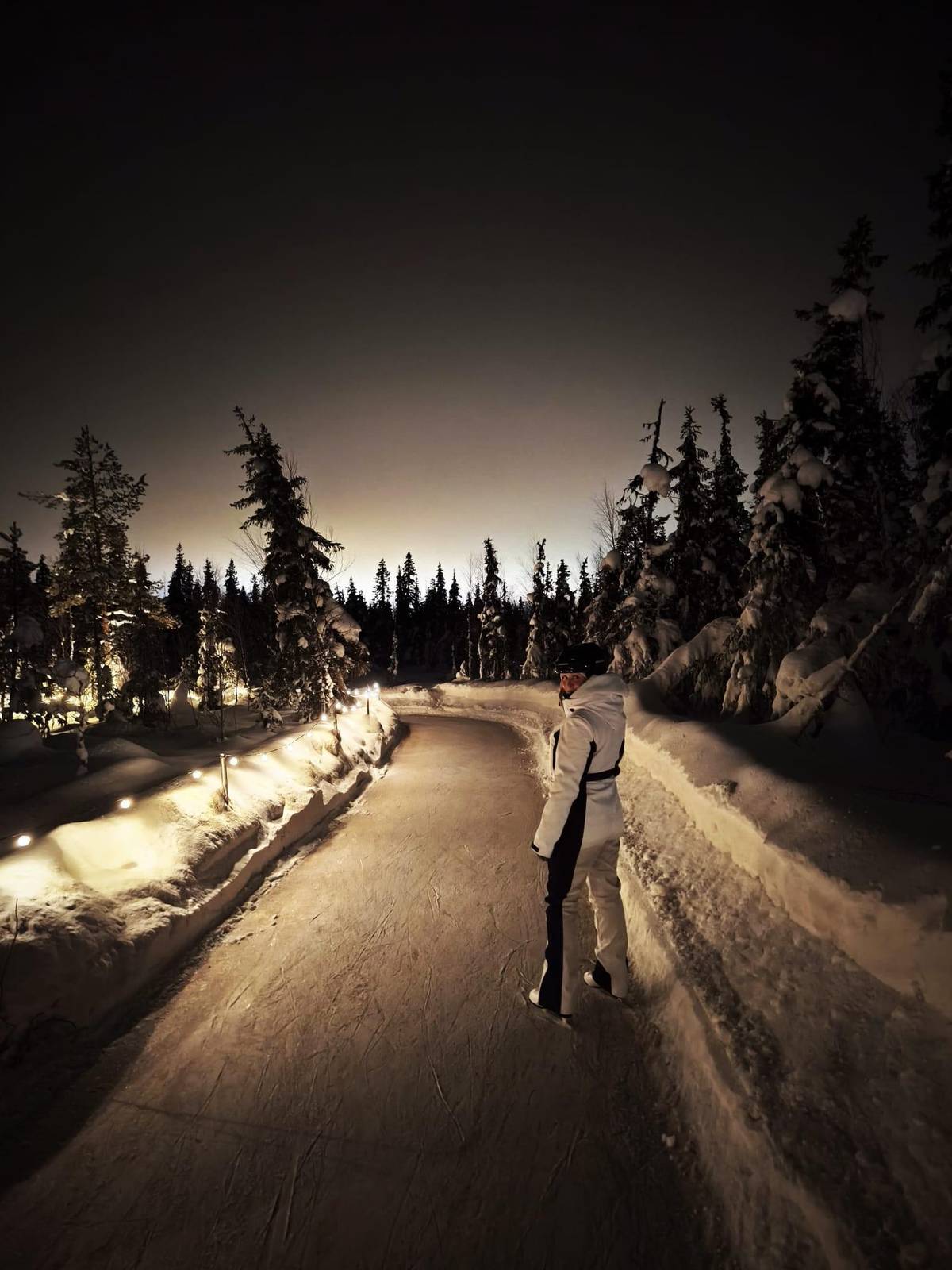
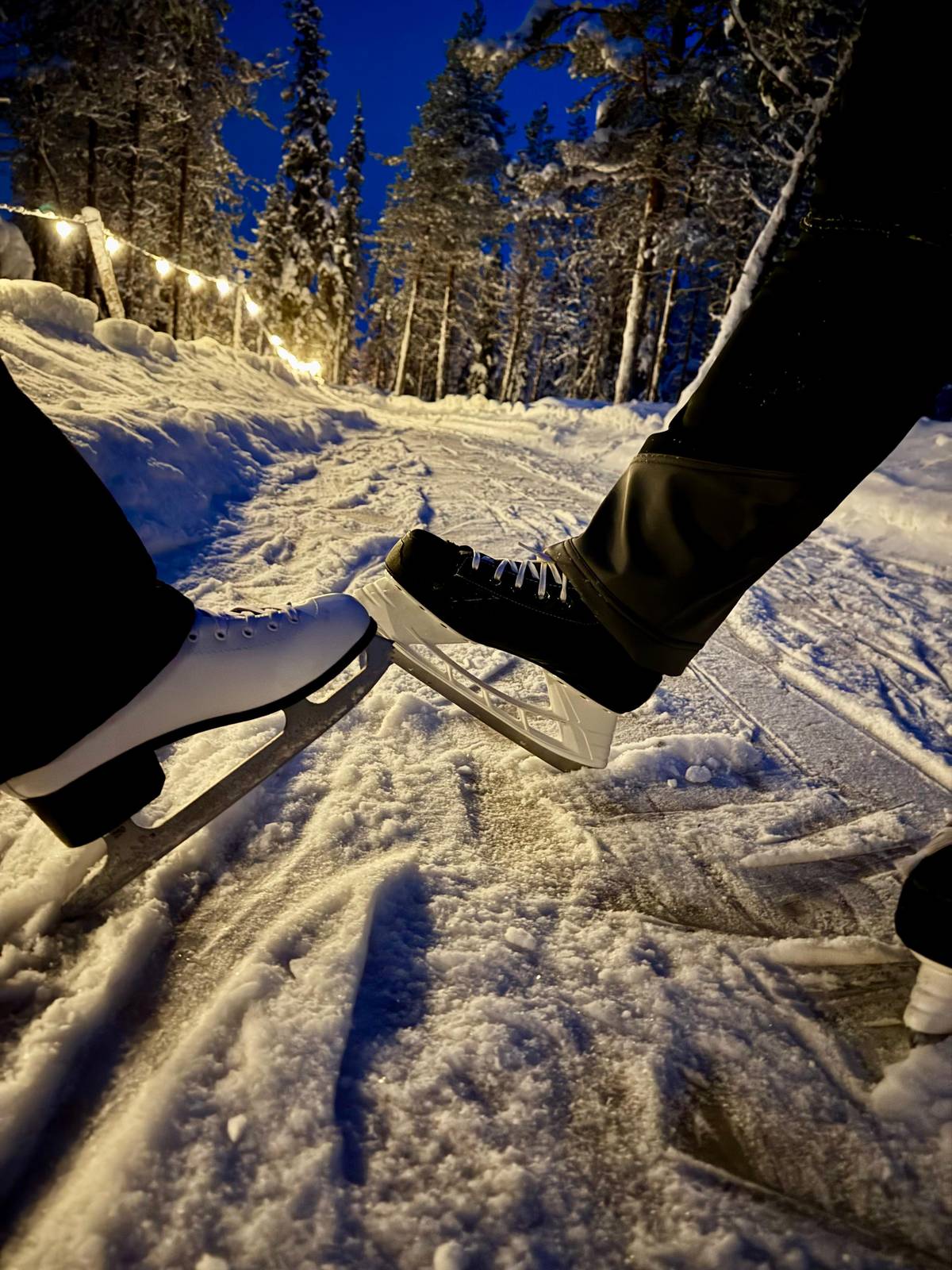
Natural ice in the forest is not a rink, and that is worth knowing as a beginner. The trail near Levi is 1 km of natural ice with several rinks, lit by bulb lights, and the session runs 2 hours from the Levi Tourist Office. The City of Rovaniemi says outdoor rink ice is not perfectly smooth and that sun, warmth and rain soften it, and natural ice in the forest is no different.29
Use the aids on offer. The kicksled, a chair on long runners that you push or sit on, lets a beginner move along the trail while holding on, and it is part of the session subject to availability. Skate a few metres, hold the kicksled, skate again: by the end of the session you may well be gliding without it.
Take breaks. The kota by the trail and the hot drinks are there for that. Balancing on blades for the first time works muscles you rarely use, and tired legs wobble. Two hours is plenty for a first session; aim for confidence in the stance, the glide and the snowplow stop, and leave turns for another day.
Choose your date
Skates, helmet, hot drinks and the shuttle included, with free cancellation up to a day before.
It depends on the programme. Learn to Skate USA runs Snowplow Sam 1 to 4 and Basic Skills 1 to 6; Skate Canada uses CanSkate Stages 1 to 6.123
Yes. Learn to Skate USA's adult programme has six progressive levels.16
Balance, gliding and stopping. Snowplow Sam introduces forward and backward skating, stops, edges and balance.11
With a snowplow stop. Glide on two feet, bend knees and ankles, press on the inside edges.9
Sideways. Then roll onto hands and knees and stand up one foot at a time.10
Yes. The forest trail session offers a kicksled for those who cannot skate, subject to availability.
Sources
Keep reading